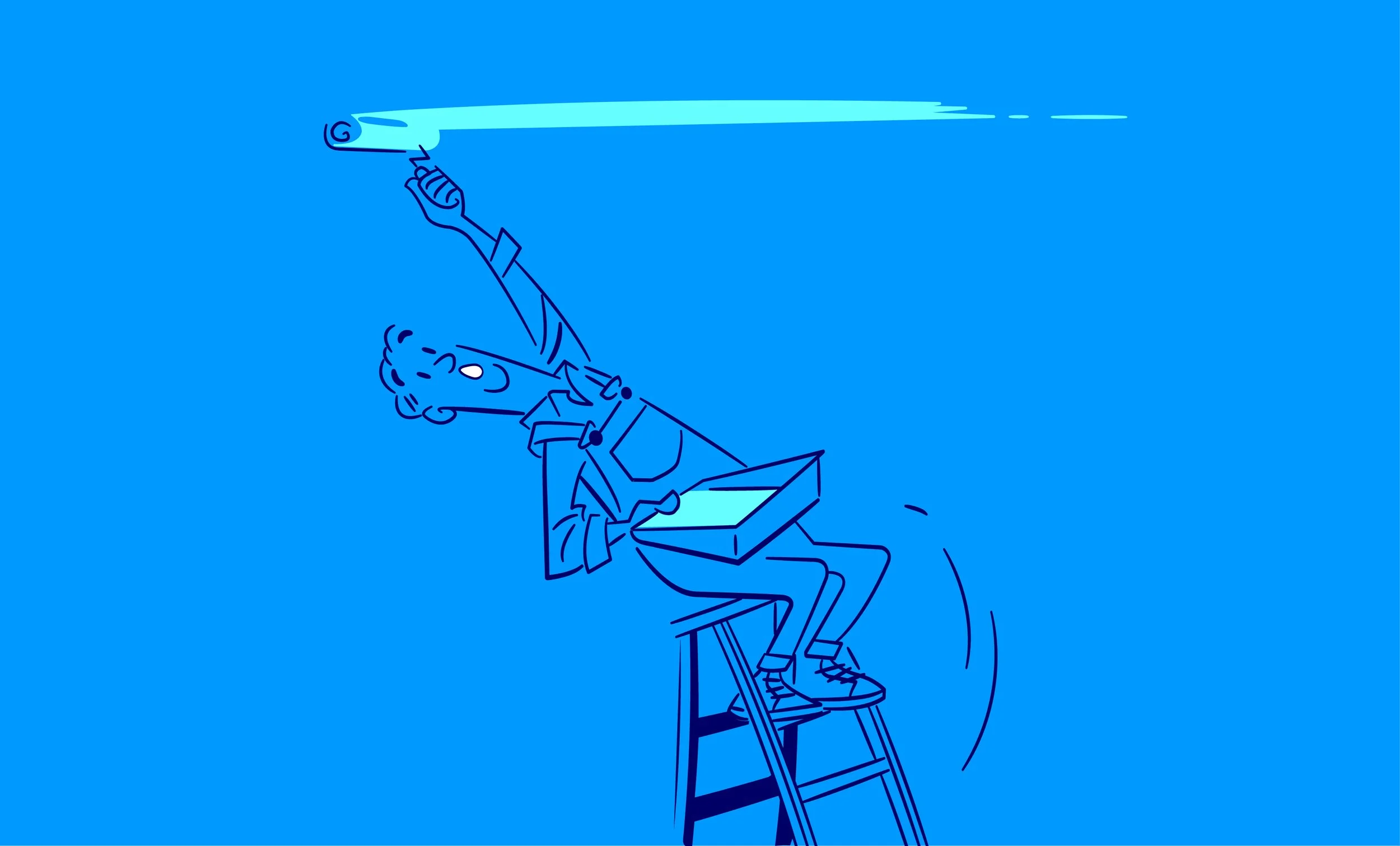
When Nik and I meet a new client to talk about their brand, especially if branding is new to them, we always start with the same point: branding is about communication, not decoration. We come back to this idea often.
It sounds obvious, but it gets to the heart of a major branding misconception. We tend to understand a brand through what we see: the logo, colours, typeface, imagery, perhaps advertising. Of course, all those things matter. We’ve spent most of our working lives obsessing over them. But they matter because they communicate. They aren’t the brand itself. They’re some of the ways the brand makes itself understood.
Communication is not just visual. What are you saying? What are your main messages? How do you sound when you say them? At Alkamee, we care as much about messaging and tone of voice as we do about visuals, because both help people understand who you are, what you stand for, and why it matters.
Even for branding professionals, how we communicate keeps changing. When I started as a designer, we would ask if a logo could be embroidered. That still matters, but now we also ask how it moves, how it looks on a small screen, how people interact with it, or even how it sounds. Brands now appear in many more places, and that number keeps growing.
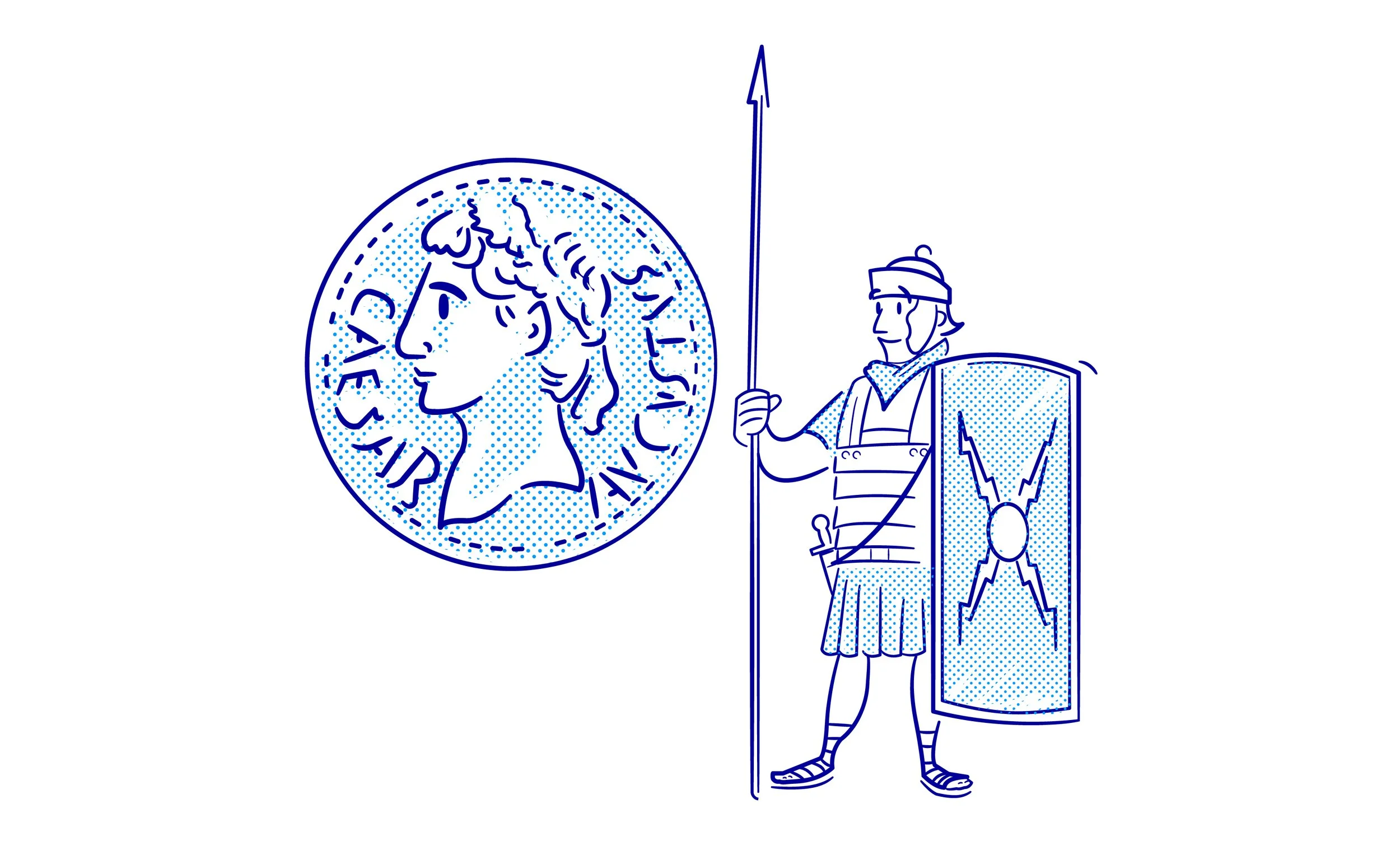
The word ‘brand’ comes from a simple idea: heating iron to mark cattle and show ownership. This one is mine, that one is yours. The Romans expanded on this by putting the emperor’s head on coins. Even if a Roman citizen in Gaul never met the emperor, seeing his face on a coin showed authority, power, and the presence of Rome.
This is where branding gets interesting for me. The mark moves from simply identifying something to communicating something.
When you see this, you think of that.
And we’ve been building on that idea ever since.
So what are we actually trying to communicate?
Today, a brand may need to show qualities like expertise, optimism, rebellion, reassurance, creativity, warmth, or ambition. It could be trying to attract customers, employees, investors, or supporters. It might need to change how people see it, enter a new market, or bring people together around a new goal. That’s a lot to ask from a logo. Before we design one, we need to understand what truly drives the organisation.
What makes it unique? What does it believe in? Why does it exist? What does it do best? Why should anyone care? What is true about it that we can build on? You might call this a purpose, a proposition, a belief, a promise, or a big idea. What matters most is that it’s true, useful, and has energy.
A strong central idea should guide you forward. It should help an organisation make decisions, bring people together inside the company, and make sense to people outside. Most importantly, it should inspire ideas, messages, experiences, and communications that all feel connected.
This forms the foundation of the brand platform. It’s not just a set of nice words for a guideline document, but a clear understanding of what makes the organisation unique and what it wants people to know about it. Once you have that, the real work starts: how do you bring it to life?
Building a brand world
Visual identity gives a brand its recognisable face, through typography, colour, imagery, illustration, graphic language and motion. And as the places where brands show up continue to expand, identities need the flexibility to move comfortably between them.
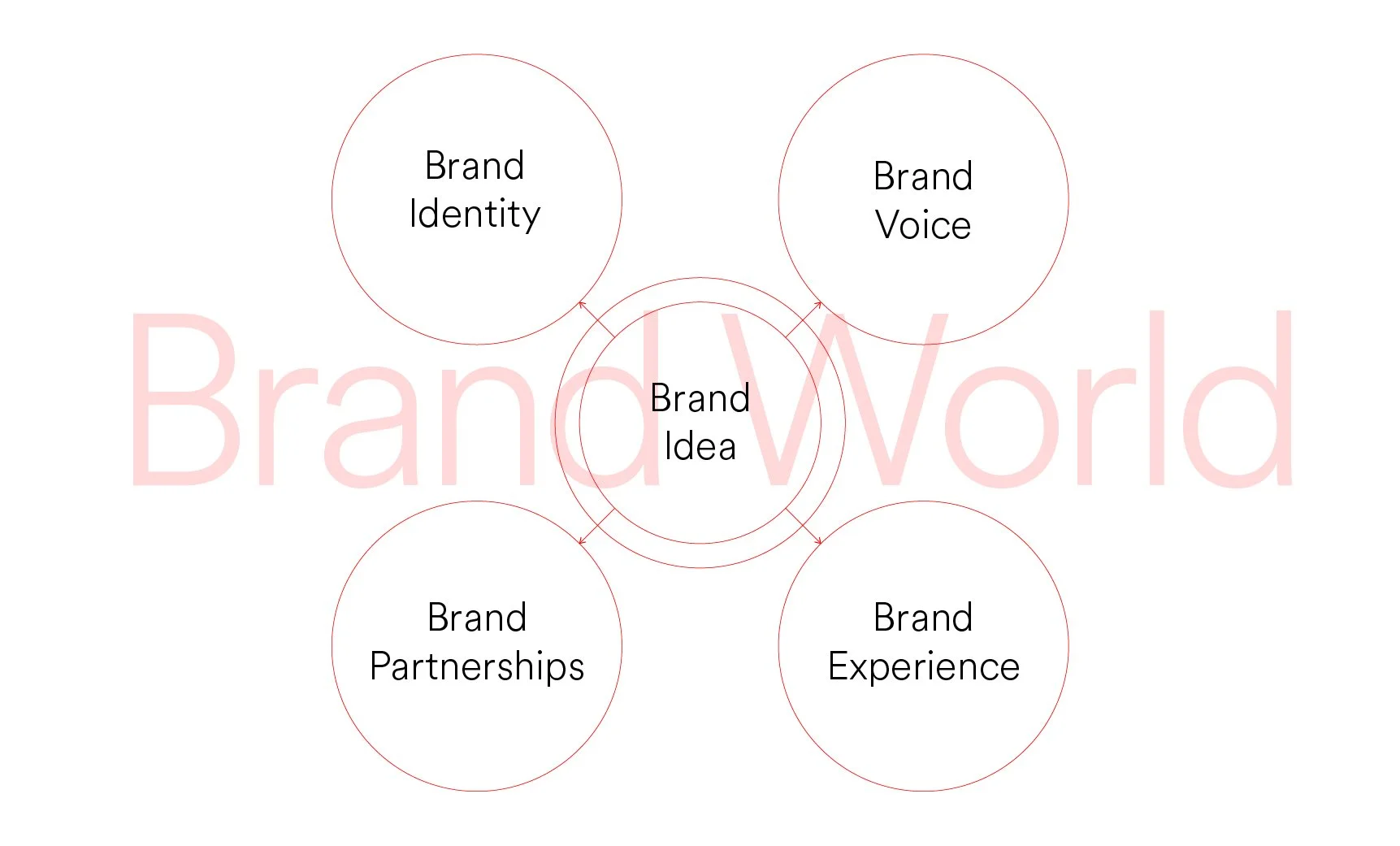
More and more, we think of this as building a brand world. A world has its own character and its own logic. You know when something belongs there and, perhaps more importantly, you notice when something doesn’t.
Language and messaging are a big part of that world. You might have a great visual identity, but generic language can weaken it: the same phrases, corporate words, and claims about innovation or putting customers first. A distinctive voice changes this. It asks not just what you say, but how you say it. Language becomes another way to build recognition, character, and connection.
Another often overlooked part of brand expression is your people. You can have a well-designed identity and clear messaging, but if someone’s experience with your organisation doesn’t match, their experience will matter more.
This is what we mean by building a brand from the inside out. Employees need to know what the brand stands for, but even more, what it means for them. How should we act? How do we talk to customers? How do the organisation’s values shape our choices? What does being warm, progressive, expert, or human look like in daily work?
People need more than a list of values. They need to understand the ideas behind the brand so they can act on them every day. Your brand comes through every time someone answers the phone, replies to an email, greets a visitor, or solves a problem. That’s why we believe employee engagement is so important: understanding must lead to action, and actions shape how people experience your organisation.
Just putting your values on a wall isn’t enough. Without understanding and action, it’s only decoration.
The same idea applies to physical spaces: offices, shops, exhibitions, events, or packaging. If sustainability is important to an organisation, its materials should show that. If the brand is warm and human, how people are welcomed may matter more than the graphics at reception. Every choice is a chance to show what the brand stands for.
It also applies to the company you keep. Brands often get chances to sponsor teams, events, athletes, cultural groups, or individuals. Too often, the first question is how many people will see the logo. A better question is: why should we be there? What does this partnership say about us? What do we bring, and what do we get? Does it reinforce what people already know about the brand, or show them something new? A good partnership should feel like a real relationship, not just a place to put your logo.
All these elements: identity, messaging, voice, motion, people, behaviour, spaces, partnerships, and experiences, create a richer brand world. They don’t have to look the same, but they should feel like they belong together.
Consistency isn’t about making everything look the same. It’s about making everything communicate the same thing.
That brand world also needs space to grow. New technologies, channels, and experiences will keep coming, and no guidelines can cover everything. What matters is that people understand the brand’s thinking well enough to make good choices about what comes next.
From ownership to invitation
This might be the biggest change in what we expect from brands. The original cattle brand said, ‘this is mine’ and marked ownership. Modern brands are doing almost the opposite—they’re inviting people in.
Brands want people to buy from them, work with them, work for them, believe in them, recommend them, support them, and sometimes even identify with them. The strongest brands create such a strong sense of belonging that people use them to express who they are. A logo on your shoes, phone, car, or T-shirt can show your taste, goals, values, or the group you feel part of. The mark now triggers memories of everything connected to it.
This brings us back to communication. You don’t create meaning just by telling people who you are. You build it through what you say, show, do, and the experiences you create. People use all of this to form their own view of you.
That’s why it’s important to see brand as more than just identity. The narrower your definition, the less useful it is. If your brand is only your logo, all you can do is put it on more things. But if your brand is an idea you express through identity, messaging, language, behaviour, environments, motion, partnerships, and experiences, it becomes much more powerful.
You create a world that people can recognise, understand, and, if you do it well, want to join.
That’s what we mean by communicate, don’t decorate.
Decoration sits on the surface. Brand runs through everything you do.
What does the association say about us? What do we bring to it? What does it bring to us? Does it reinforce something people already understand about the brand, or perhaps reveal something they hadn’t considered before?
A good partnership should feel like a relationship, not simply somewhere you’ve bought the right to put your logo.
All these things, visual language, voice, motion, spaces, behaviour, partnerships and experiences, build a richer brand world. They don’t need to look identical, but they should feel as though they belong together.
That distinction matters. Consistency isn’t about making everything look the same. It’s about making everything communicate the same thing.
And that world needs room to grow. New technologies, channels, products, partnerships and experiences will keep appearing, and no set of guidelines can anticipate all of them. What matters is that the thinking behind the brand is clear enough to guide what comes next.
If people understand why a brand looks, sounds and behaves the way it does, they can make intelligent decisions when something new comes along. If all they have is a PDF telling them what not to do, sooner or later they’ll encounter something the PDF never anticipated.

From ownership to invitation
Perhaps this is the biggest change in what we ask brands to do.
The original cattle brand was essentially saying, ‘this is mine’. It marked ownership. It drew a boundary.
Modern brands are trying to do almost the opposite. They’re trying to invite people in.
They want people to buy from them, work with them, work for them, believe in what they’re doing, recommend them, support them and sometimes even identify with them.
The strongest brands can create a sense of belonging so powerful that people use them to express something about themselves. A particular logo on your shoes, your phone, your car or your T-shirt can communicate something about your taste, your aspirations, your values or the group you feel part of.
The mark has become a memory trigger for everything that has accumulated around it.
And that brings us back to communication.
You don’t create meaning simply by telling people who you are. You build it through the accumulation of what you say, what you show and what you do. People experience those things and form their own perception of you.
That’s why understanding brand as something broader than identity matters. The more narrowly you define it, the less useful it becomes. If your brand is essentially your logo, then the best you can do is put that logo on more things.
But if your brand is an idea that can be expressed through identity, language, behaviour, environments, motion, partnerships and experiences, it becomes something considerably more powerful.
You create a world people can recognise, understand and, if you get it right, want to be part of.
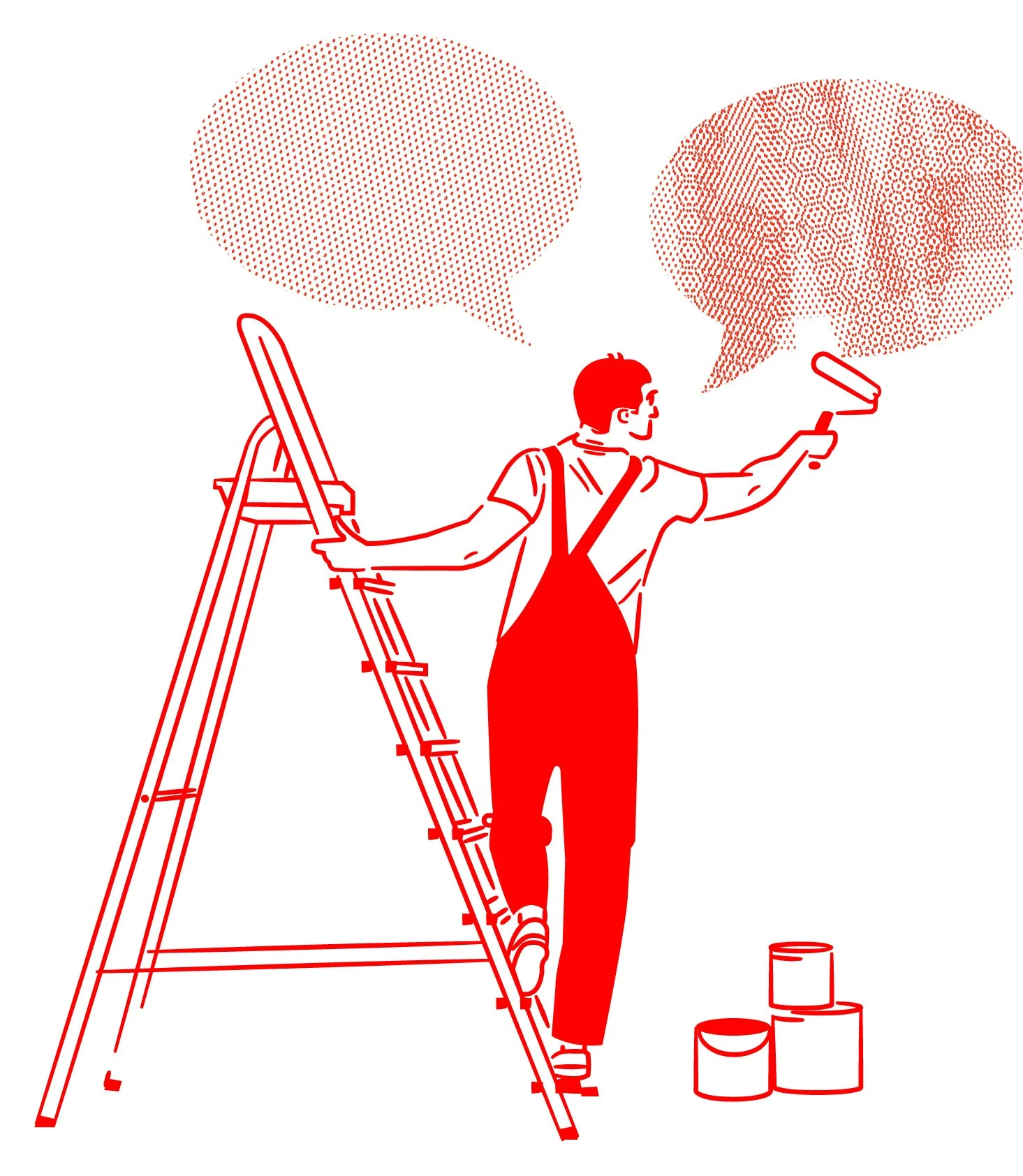
That’s what we mean when we say communicate, don’t decorate.
Decoration sits on the surface. Brand runs through everything you do.