The Power of Simpler Language

Making Room for Meaning:
Somewhere along the way, complexity became a sign of sophistication.
Businesses started talking about solutions, frameworks, ecosystems and value propositions. Messaging became padded, overqualified and polished until it no longer sounded like anyone you'd actually meet in real life.
Yet in our work across energy, food, healthcare and financial services, we've noticed something interesting.
The brands that connect most effectively are often the ones that communicate most simply.
Not because they're simplistic.
Because they're clear.
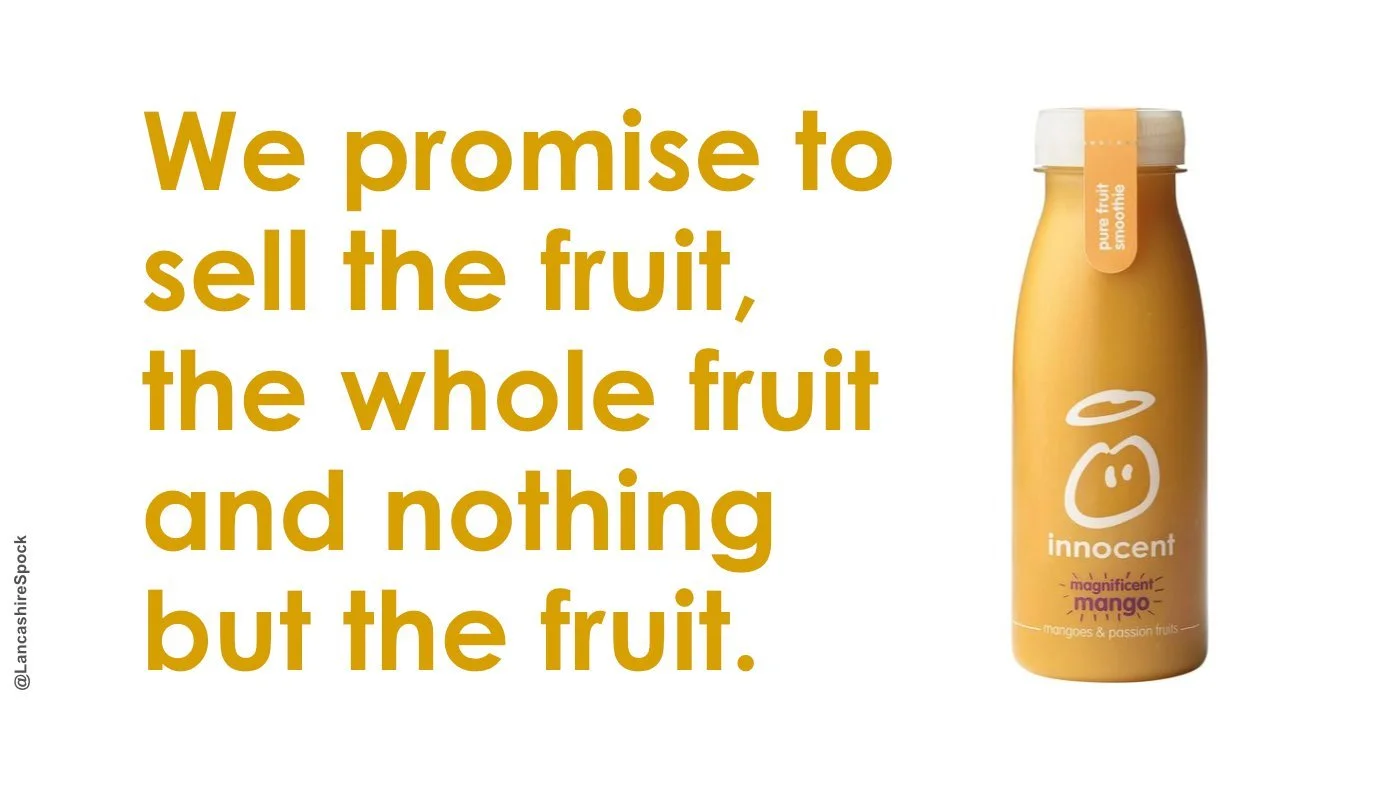
The game changing conversational tone of Innocent
Clear Doesn't Mean Basic
Simple language isn't about dumbing things down. It's about making space for what matters.
It's the difference between saying:
"We empower future-ready energy solutions."
and:
"We help you waste less energy."
One sounds impressive.
The other makes sense.
The best communicators understand that clarity isn't the enemy of intelligence. It's evidence of it.
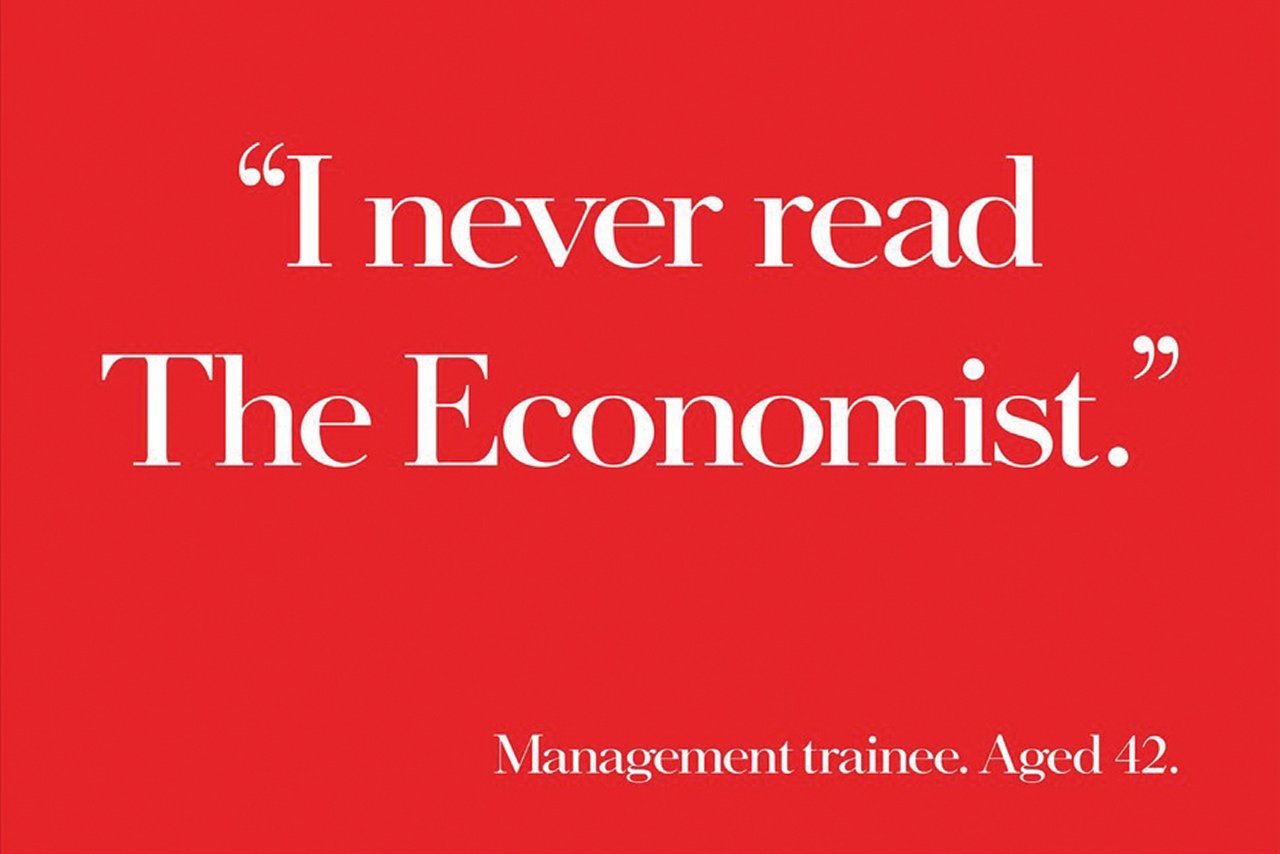
The Economist reflects its audience through clever copywriting
Simplicity Is A Craft
Paul Belford's famous work for The Economist remains one of the finest examples.
"I never read The Economist."
"Management trainee. Aged 42."
Two short lines.
No wasted words.
No explanation required.
The ad respects your intelligence, rewards your attention and says more in a few words than many brands manage in an entire brochure.
The same principle can be found in very different places.
Innocent's writing feels human, warm and conversational.
Macmillan's tone is calm, reassuring and deeply empathetic.
Spotify's work with Christopher Doyle is playful, witty and self-aware.
Different voices.
Different audiences.
One shared principle.
Every one of them knows exactly who they're talking to and speaks in a way people naturally understand.

Why Simplicity Wins
People are overwhelmed.
By information.
By choice.
By advertising.
By endless streams of content competing for attention.
The brands that cut through aren't always the loudest.
They're the clearest.
Simple language helps organisations:
Build trust.
Explain complex ideas.
Create stronger emotional connections.
Improve understanding.
Increase confidence and engagement.
It's not about being casual.
It's about being human.

Five Signs You Might Be Overcomplicating Things
You've written "in order to" instead of "to".
You're using three nouns in a row.
Your tone of voice guidelines are 67 pages long and nobody reads them.
Your copy sounds like it was written for a boardroom rather than a person.
There isn't a contraction anywhere in sight.
Clarity Creates Connection
At Alkamee, we believe many organisations don't have a communication problem.
They have a clarity problem.
The role of language isn't to sound clever. It's to create understanding.
When you remove the clutter, the message becomes stronger.
When the message becomes stronger, people connect with it.
And when people connect with it, brands become easier to understand, trust and remember.
That's not a writing trick.
That's the real work.