
Clarity is easy to talk about and surprisingly difficult to achieve.
In our experience, one of the greatest gifts we can give an organisation isn't a new logo, a new website or even a new brand identity. It's clarity.
As outsiders, we have the advantage of arriving without assumptions. We aren't immersed in the day-to-day realities of the business. We don't carry years of internal language, habits or inherited thinking. Instead, we see things much as customers, employees and stakeholders do.
Often, what we discover is that organisations have drifted. Not intentionally, but gradually. New products are added, new services emerge, priorities shift and markets change. Over time, the picture becomes less clear. The organisation begins to lose sight of what makes it distinctive and valuable in the first place.
Many businesses are far more remarkable than they realise. Sometimes their most valuable asset is hidden in plain sight. The thing they do better than anyone else. The thing customers genuinely value. The thing competitors struggle to replicate.

Clarity is about uncovering that truth.
It is about seeing the organisation as it is today, not as it was five years ago and not as we would like it to be. It is about separating the essential from the incidental and understanding what truly matters.
Perhaps most importantly, clarity is about expression. If you cannot explain who you are, what you do and why it matters in a simple sentence, there is every chance your customers can't either.
The strongest brands are rarely the loudest. They are the clearest.
They understand what they stand for, who they serve and why they matter. That clarity creates focus. It guides decision making. It aligns teams. It prevents brand bloat and the endless temptation to be everything to everyone.
Without clarity, every decision carries greater risk.
It's a little like a game of Jenga. As organisations grow, they naturally add new products, services, initiatives and ideas. Some strengthen the structure. Others simply add weight and complexity. The challenge is knowing which pieces are fundamental to the organisation's success and which can be removed without consequence.
Without clarity, every block can appear equally important.
With clarity, you begin to understand what sits at the heart of the brand. You know which pieces support the structure, which create distinction and which, if removed, could cause the whole thing to wobble.
That understanding creates confidence. It allows organisations to evolve, innovate and grow without losing sight of what made them valuable in the first place.
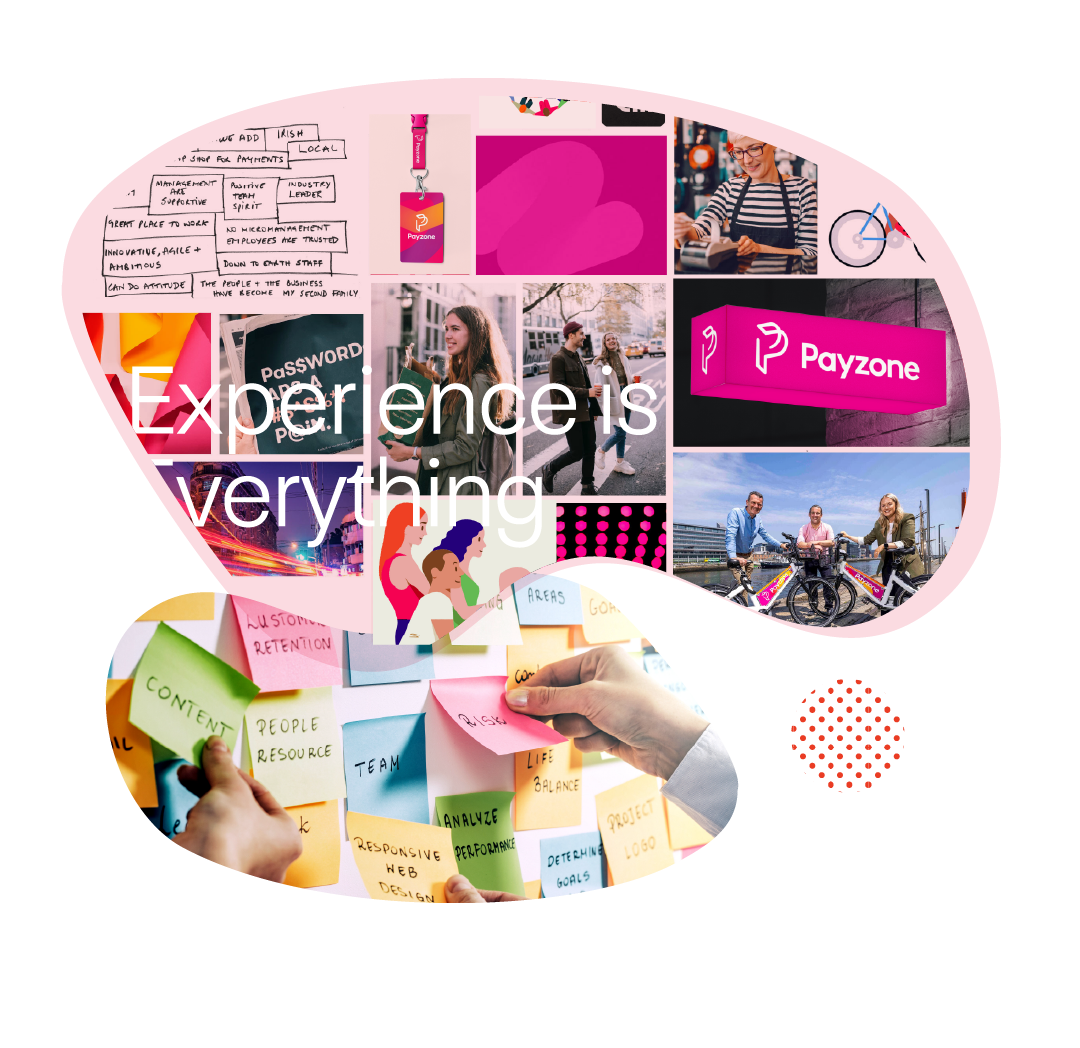 We see this challenge regularly in our work.
A few years ago, we worked with Payzone as the payments landscape was changing rapidly. New technologies were emerging, consumer expectations were evolving and traditional payment providers were increasingly becoming invisible parts of a much larger ecosystem.
The challenge wasn't a visual one. It wasn't about colours, logos or advertising.
The challenge was clarity.
Payzone had built an impressive business, but the organisation had become closely associated with the mechanics of payment. Through research, workshops and strategic development, we began asking a different question. What if Payzone wasn't really about payments at all?
The answer transformed the conversation.
Rather than focusing on transactions, the strategy shifted towards experience. Rather than talking about collecting tolls, paying school fees or topping up utilities, we began looking at the role Payzone played in making everyday life easier. The organisation moved from thinking about products to thinking about people, from processing payments to creating better experiences.
The identity changed, but that wasn't the most important outcome. The real value came from helping the organisation see itself more clearly, understand its future role and create a stronger focus for the journey ahead.
Ultimately, that clarity became a compass. It informed strategy, shaped communication and gave the organisation a clearer picture of where it was heading.
Before investing in a new logo, a new website or a new campaign, perhaps the more important question is this:
Are you completely clear on who you are, what makes you different and why people should choose you?
Because before a brand can be remembered, it first needs to be understood.